Sixth Schedule of the Indian Constitution: Autonomous District Councils, Powers and Ladakh
Sixth Schedule of the Indian Constitution: Article 244(2), the 10 Autonomous District Councils in 4 states, their powers, Fifth vs Sixth and Ladakh.
Sixth Schedule of the Indian Constitution: Article 244(2), the 10 Autonomous District Councils in 4 states, their powers, Fifth vs Sixth and Ladakh.
Chromosomal aberrations for UPSC Anthropology: structural and numerical types, translocation, and Down, Turner and Klinefelter syndromes explained.
Theories of evolution for UPSC: Lamarckism, Darwin’s natural selection, mutation theory, Neo-Darwinism and the synthetic theory, with criticism.
PVTG full form is Particularly Vulnerable Tribal Groups. Learn the 4 criteria, the 75 PVTGs by state, Telangana’s PVTGs and the PM JANMAN mission.
Radiocarbon (C14) dating for UPSC: Libby’s method, the 5,730-year half-life, AMS, calibration and limits, plus potassium-argon and other methods.
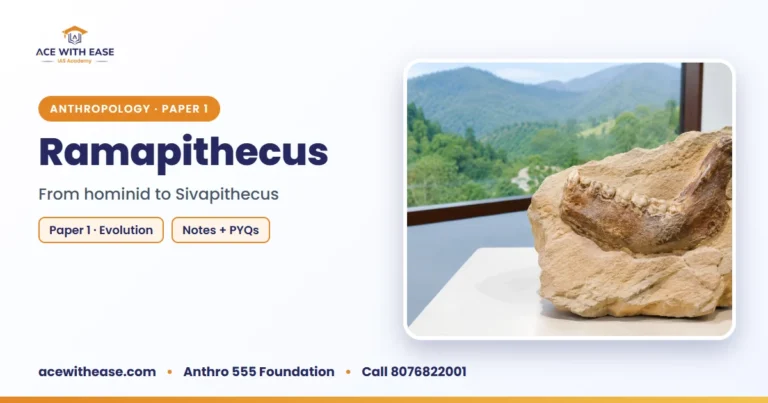
Ramapithecus for UPSC Anthropology: Siwalik discovery by G.E. Lewis, dental features, why it was called a hominid and why it is now Sivapithecus.
UPSC essay topics: real previous-year essay questions, theme-wise practice topics, the essay paper pattern and how to pick and plan your essay.
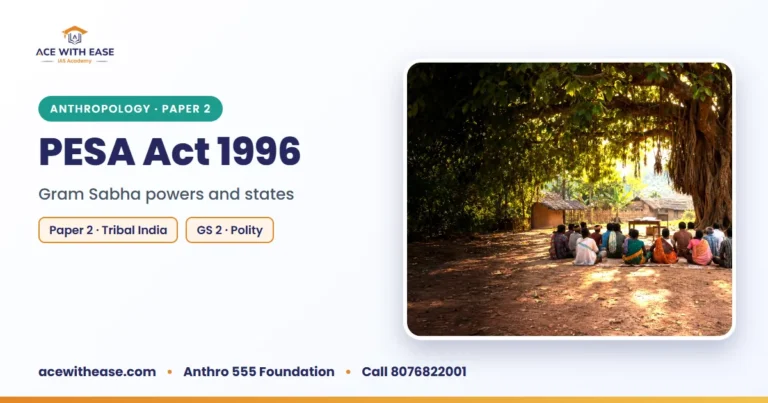
PESA Act 1996 explained: full form, Bhuria Committee, Gram Sabha powers, the 10 Fifth Schedule states, state rules and implementation gaps for UPSC.
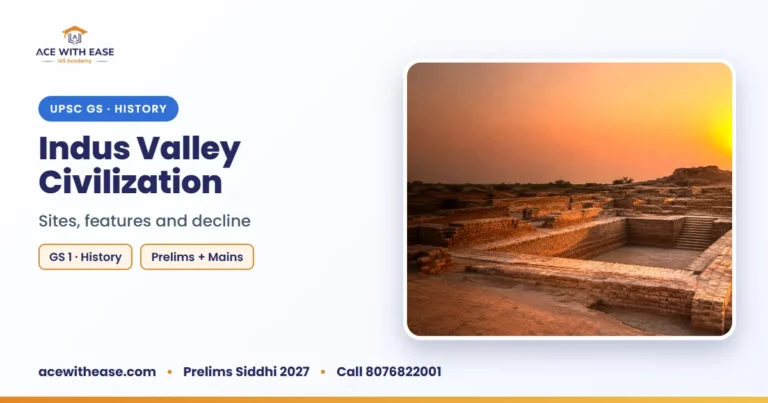
Indus Valley Civilization for UPSC: phases, important Harappan sites with rivers and finds, town planning, economy, religion, script and decline theories.