Modes of Subsistence and Globalization: Impact on Indigenous Economic Systems | UPSC Anthropology
⏱ 14 min read | ~2957 words
For most of human history — roughly 95% of it — every person on earth was a hunter-gatherer. Agriculture is only about 10,000 years old. Industrialization barely 300 years. Yet today, we judge ancient subsistence economies as “backward” and push people toward market integration. Economic anthropology asks us to pause and really understand what these subsistence systems are, how brilliantly they functioned, and what is lost when globalization dismantles them.
If you’re preparing for UPSC Anthropology Paper 1, understanding modes of subsistence is essential. Questions on hunting-gathering economies, pastoralism in India, the impact of globalization on tribal communities — these appear regularly in the exam. More importantly, they reveal fundamental truths about how different societies relate to land, labor, and each other. This guide walks you through each subsistence mode and examines how globalization is transforming them.
What Is a Subsistence Economy?
Before diving into types, let’s clarify what we mean by subsistence economy. A subsistence economy is a system where production is primarily aimed at meeting the needs of the producers and their community — not for profit or market exchange.
The logic is “production for use” rather than “production for exchange.” You produce enough for your family and your community to survive and thrive. You’re not trying to maximize output to sell for profit. You’re not accumulating capital. You’re ensuring sufficiency and security.
Subsistence economies are characterized by:
- 1Low technologyhand tools, animal power, no mechanization
- 2Family as productive uniteconomic activity centers on kinship groups
- 3Reciprocity and redistributiongoods circulate through social obligation, not price
- 4Integration of economic and social lifeproducing food isn’t separate from kinship, ritual, or political activity
These aren’t static or unchanging systems. They’ve adapted for millennia to different environments and circumstances. But they operate on fundamentally different logic than capitalist market economies.
Six Modes of Subsistence
Mode 1: Hunting and Gathering
Hunting-gathering societies are typically nomadic or semi-nomadic, following animal migrations and seasonal plant availability. Social organization centers on bands of 30-50 people — large enough for marriage partners and mutual aid, small enough to function without formal leadership.
Key characteristics include no food storage (everything is consumed immediately), egalitarian social structure with minimal hierarchy, no concept of individual property in land or resources, and high cultural value placed on sharing and generosity. Property is typically personal (your spear, your clothes) but not resource-based.
Marshall Sahlins, the American anthropologist, challenged Western assumptions about hunter-gatherer poverty. He argued they were the “original affluent society” — not because they were wealthy by our standards, but because their wants are limited and easily satisfied. Hunter-gatherers “work” only 3-5 hours daily for food, spending the rest on leisure, social life, ceremony, and art. The abundance comes from modest wants meeting modest labor.
Indian examples include the Andaman Islanders (Jarawa, Sentinelese, Onge), the Birhor of Jharkhand, the Chenchu of Andhra Pradesh, and the Hill Pandaram of Kerala. These communities practice hunting, fishing, and gathering of forest products, though most now face pressure to sedentarize and integrate into markets.
Mode 2: Fishing
Fishing is typically more sedentary than hunting-gathering. Fishing sites can be used year-round or seasonally year after year. This allows for permanent villages, architecture, and greater material accumulation.
Many fishing communities combine fishing with horticulture and gathering. The seasonal availability of fish means people need supplementary food sources. In many societies, fishing is men’s work while women cultivate gardens or gather forest products.
Indian examples include coastal fishing communities of Kerala, Andaman Islander sea communities, and communities along the Brahmaputra in Assam. These communities have developed sophisticated knowledge of fish behavior, tides, and seasons — not “primitive” knowledge but highly adapted expertise.
Mode 3: Swiddening (Shifting Cultivation)
Swiddening, also called shifting cultivation or slash-and-burn, is a horticultural technique practiced throughout tropical forest regions. A plot of forest is cleared by cutting and burning vegetation, farmed intensively for 2-3 seasons, then deliberately left fallow for 10-20 years to regenerate.
The ecological logic is sophisticated. Burning the forest returns nutrients to soil. Rotating fields through a long fallow period allows soil regeneration and prevents nutrient depletion. In stable form, swiddening is a sustainable system — it can continue indefinitely without environmental degradation.
But swiddening requires large tracts of forest and low population density. As forests shrink and population grows — as is happening across India and Southeast Asia — fallow periods must shorten. Shorter fallows mean degraded soil, declining productivity, and eventual abandonment of agriculture.
Swiddening is not primitive. It requires sophisticated ecological knowledge. Practitioners understand soil regeneration, plant succession, and seasonal timing. They manage biodiversity carefully, often deliberately cultivating useful species among cultivated crops.
Indian examples include jhum cultivation practiced by Naga, Garo, Mizo, and other Northeast Indian tribes. Central Indian tribes including Kondh, Oraon, and others also practiced swiddening. The Vedic literature mentions shifting cultivation, showing it’s ancient in India.
Today, swiddening faces crisis. Forest laws restrict burning. Protected areas and wildlife sanctuaries block traditional lands. Population pressure makes long fallows impossible. Productivity drops. Communities are pushed toward settled agriculture or wage labor.
Mode 4: Pastoralism
Pastoral societies tend toward egalitarianism; wealth is measured in livestock. A man with many cattle has resources but also obligations — to share with less fortunate relatives, to provide bride price, to support feasting. Livestock can be eaten, used for transport, provide hides, milk, and dung. They’re productive assets that generate surplus.
Pastoralism requires extensive grasslands. Population density must remain low to avoid overgrazing. Most pastoral societies combine herding with some agriculture or trade, using pastoral products (hides, wool, dairy) in exchange for grain and craft goods.
- 1Gujjars and Bakarwalsof Jammu & Kashmir: transhumant herders of sheep and goats who move seasonally between summer high pastures and winter lowlands
- 2Raikasof Rajasthan: camel herders, formerly wealthy, now marginalized as camel demand dropped with mechanization
- 3Todaof the Nilgiri Hills in Tamil Nadu: buffalo pastoralists with unique cultural practices and social organization
Pastoralism in India faces severe challenges. Encroachment of forests and pasture land by agriculture and human settlement shrinks available grazing. Wildlife sanctuaries block traditional migration routes. Climate change creates unpredictable droughts. Pastoral communities face marginalization and pressure to abandon herding for settled wage labor.
Mode 5: Horticulture
Horticulture often combines with gathering and fishing. Horticultural societies frequently produce variety — multiple crops in gardens, often intercropping. This creates more varied diet than monoculture agriculture typically provides.
The Trobriand Islanders, studied extensively by Bronislaw Malinowski, exemplify horticultural-fishing societies. Yam cultivation is central to their economy, social organization, and ritual life. Yams provide staple calories, but the social meaning of yams — who produces them, who receives them, how they’re displayed — structures kinship and politics.
Horticultural technology is low-input, low-output compared to agriculture. But it’s often sustainable and provides nutritional security. It typically supports higher population density than hunting-gathering but lower than agriculture.
Mode 6: Agriculture
Agriculture is intensive cultivation involving plows, draft animals, irrigation, and often fertilizers. Agricultural production is far more intensive than horticulture — higher output per unit land, capable of supporting much larger populations.
Agriculture produces surplus — enough beyond immediate consumption to support non-farming specialists: priests, artisans, warriors, merchants, rulers, bureaucrats. This surplus supports social stratification. Agriculture is associated with:
- 1Sedentary settlement (permanent villages and cities)
- 2Population growth
- 3Social hierarchy and states
- 4Writing systems
- 5Occupational specialization
Indian tribal agriculture is diverse. Many tribal communities have transitioned to agriculture over centuries. But tribal agricultural systems often remain more ecologically integrated than the chemical-intensive Green Revolution agriculture that dominates Indian farming. Some tribal communities maintain agroforestry systems that combine cultivation with tree management.
Globalization and Indigenous Economic Systems
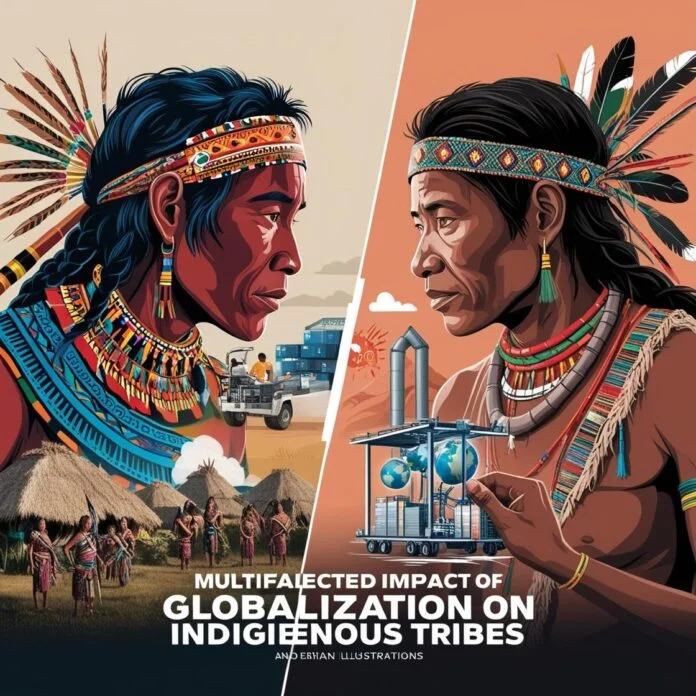
Globalization means increasing integration of world markets, capital flows, technology, and culture. For indigenous communities, however, globalization is not simply an economic process. It’s a cultural and social transformation that often disrupts the foundations of traditional life.
Key Impacts of Globalization on Indigenous Economies
Market Penetration and Commodification
Globalization pulls subsistence economies into cash economies. Land, which was once a common resource managed by community, becomes a commodity — bought, sold, and owned individually. Labor, which was once organized through kinship obligation, becomes a commodity — sold for wages to strangers.
When a pastoral community is forced to sell animals for cash to pay taxes or school fees, they become dependent on market prices they don’t control. If cattle prices crash, families can’t pay school fees and children leave education. When forest communities must buy food at market prices instead of gathering it, they depend on income sources beyond their control.
The transition from production for use to production for exchange is rarely smooth. Communities get locked into dependency on markets and wages before local economic alternatives develop.
Loss of Livelihood and Resource Base
Forest-based communities lose access to forests due to commercial logging, conservation policies, mining, and dam projects. Their subsistence base — the forest that provided food, materials, and livelihood — is destroyed faster than communities can integrate into market economies.
Large dams displace communities. The Narmada dam projects in India displaced thousands of Gondi, Bhil, and Barela communities. Rehabilitation has been inadequate. Communities lost not just land but access to river resources, forest products, and established social networks.
Mining operations in tribal areas destroy forests and soil, making traditional subsistence impossible. Wildlife sanctuaries, though important for conservation, sometimes exclude local communities from traditional hunting and gathering grounds.
Communities face a terrible choice: abandon the subsistence base that sustained them, or resist displacement and face legal and police action.
Cultural Disruption and Loss of Traditional Exchange
Traditional exchange systems — reciprocity, redistribution, kula-type networks — operate on social logic. I give you a gift, creating obligation. You’re obligated to reciprocate. This creates ongoing relationships.
When cash becomes the universal medium of exchange, this logic breaks down. Why share with relatives when you can sell to a stranger? Why maintain a redistributive relationship with a chief when you can buy what you need? Why participate in a costly gift exchange when cash is scarce?
The jajmani system in Indian villages, which tied service castes to landowning families through hereditary, reciprocal (though unequal) relationships, has largely dissolved. Service castes, freed from fixed obligation but also lost from assured compensation, must compete in cash labor markets. Landowning families hire cheaper outside labor.
Social cohesion built through reciprocity and redistribution frays. Communities become collections of individuals competing in markets rather than networks of mutual obligation.
Displacement and Development Projects
“Development” projects — dams, highways, mining operations, wildlife sanctuaries — often displace tribal communities without adequate alternatives. The state may see development as necessary progress; communities see it as dispossession.
The Narmada Valley Development Authority built dams along the Narmada River, displacing over a million people, many of them tribal. Promised rehabilitation rarely materialized. Communities lost land, livelihood, and cultural sites.
Mining in Jharkhand, Chhattisgarh, and Odisha has displaced thousands from tribal communities. Iron ore, coal, and other mineral extraction destroys forests and agricultural land. The wealth extracted leaves communities impoverished.
Forest conservation itself can displace communities. Tiger reserves and national parks sometimes exclude indigenous communities who had managed these forests sustainably for centuries, only to bring in armed rangers to prevent “poaching” — often of animals that indigenous communities traditionally hunted.
Positive Opportunities from Globalization
It’s important to acknowledge that globalization has brought some genuine benefits to indigenous communities:
- 1Access to healthcare and educationMarket integration brings clinics, schools, and medical services to remote areas
- 2Improved infrastructureRoads, electricity, communication technology improve material conditions
- 3New livelihood opportunitiesSome communities have successfully integrated traditional crafts into global markets
Kutch embroidery from Gujarat, Bastar metalwork from Chhattisgarh, and tribal textiles from Northeast India have found markets globally. Communities controlling this production have gained income while maintaining traditional skills.
Some tribal communities have become successful entrepreneurs, using education and market access to improve livelihoods while maintaining cultural identity.
The Anthropological Perspective: Dalton and Bohanan’s Research
Dalton and Bohanan studied the impact of colonization on African tribal economies — the Bushang, Nandi, Lela, and Nupe peoples. They documented how colonial market integration disrupted traditional redistribution and reciprocity systems without providing adequate replacements.
When colonial governments imposed cash taxes, communities had to produce cash crops or sell labor. This pulled people away from subsistence activities and redistributive obligations. The social institutions that had provided security — reciprocal sharing, redistributive feasting, kinship support — weakened as cash logic penetrated.
The result: disrupted traditional systems, impoverished communities, and social dislocation. The transition to market integration benefited colonial powers and merchant classes, not indigenous communities.
Contemporary Strategy: Indigenous Economic Sovereignty
A growing movement advocates for “indigenous economic sovereignty” — the right of communities to integrate into markets on their own terms, without surrendering subsistence base or cultural identity.
Rather than complete integration or complete rejection of markets, communities want the choice. They want to maintain subsistence activities (farming, herding, gathering) as security while also accessing markets. They want control over their resources and the ability to decide development paths.
India’s Forest Rights Act (2006) represents one policy attempt in this direction. It recognizes community forest rights, allowing tribal communities to access forest resources for livelihood. It’s imperfectly implemented but represents acknowledgment that communities have rights to their traditional resources.
Indigenous movements increasingly demand:
- 1Land rights and resource controlformal recognition of community ownership of forests, pastures, and agricultural land
- 2Cultural rightsrecognition of traditional knowledge and practices
- 3Self-determinationcommunity voice in decisions affecting their territories
- 4Market access on favorable termsability to sell products without middlemen exploitation
📌 UPSC Previous Year Questions
- Q: 2018: Write the characteristics of hunting and gathering economy.
- Q: 2019: Write a note on pastoralism in India in 150 words.
- Q: 2019: Discuss how indigenous people encounter globalization.
- Q: 2013: Discuss the impact of globalization on tribal economy.
- Q: 2021: Write a note on modes of subsistence in 150 words.
❓ Frequently Asked Questions